


Why Every Business in Qatar Needs a Security System

Qatar stands as one of the world’s safest countries, ranking third globally with a safety index score of 84.6%. However, even in this secure environment, businesses face evolving threats from cybercrime, regulatory requirements, and the complexities of operating in a rapidly digitalizing economy.

As the country advances towards its National Vision 2030, driven by substantial investments in infrastructure and technology, the need for robust security systems – both physical and digital – has never been more critical. 

What many business owners don’t realize is that security systems, especially CCTV surveillance, are mandatory for most sectors in Qatar. Failure to install and maintain proper security systems can result in serious complications when acquiring or renewing business licenses, trade permits, and other essential certifications required to operate legally in the country.

In this guide, we’ll break down the rising security challenges facing businesses in Qatar, from MOI regulations and smart city vulnerabilities to essential physical and cybersecurity systems. You’ll also learn the real business benefits of a strong security setup and how to choose the right solution for your operations.

6 Key Benefits of Installing Security Systems in Qatar

Installing security systems helps Qatar businesses prevent crime, protect assets, ensure safety, and stay compliant with MOI regulations. They support operations, reduce internal losses, enable remote management, and build trust with customers and employees alike.

Crime and Theft
Deterrence

The visible presence of CCTV systems, barriers, and alarms serves as a powerful deterrent to criminals, reducing risks of theft, vandalism, and unauthorized access. Modern systems with crash-rated barriers and AI-powered surveillance strengthen this deterrent effect significantly.

Real-Time Monitoring and Rapid Response

High-definition CCTV and surveillance systems enable live monitoring from any location, allowing for fast responses to incidents or emergencies. Integration with AI and IoT technologies means advanced systems can send instant alerts for abnormal activities, automating both detection and response.

Incident Investigation and Evidence Gathering

In Qatar, businesses cannot share CCTV footage with third parties without approval from the Ministry of Interior (MOI). Working with MOI-approved contractors ensures that all legal procedures are properly followed when using surveillance footage for investigations, disputes, or insurance and legal claims.

Operational Benefits You Didn't Expect

Modern security systems do more than watch for trouble. Remote monitoring lets you check your business from anywhere. Time attendance systems track employee hours accurately. Insurance companies often give discounts for comprehensive security, which can offset your system costs.

image of premier infotech white logo

Asset and Data Protection

Access control systems, biometric readers, and burglar alarms protect assets, data centers, vaults, and restricted areas from unauthorized access. CCTV and alarm systems increase safety for employees, residents, and visitors by monitoring entrances, exits, and high-traffic zones.

Safety for Everyone

Your employees work better when they feel safe. Your customers shop more when they trust your environment. Security systems create that peace of mind everyone needs. Plus, if there’s ever workplace harassment or violence, your cameras can help protect victims and hold wrongdoers accountable.

image of premier infotech white logo

Smart City Initiatives: New Technology, New Vulnerabilities

Qatar’s smart city projects create cybersecurity vulnerabilities because IoT devices, connected infrastructure, and digital systems expand attack surfaces, requiring businesses to implement comprehensive cybersecurity solutions and secure network infrastructure.

Qatar’s TASMU Smart City Program is transforming how businesses operate. But every smart device is a potential security risk.

Smart Technology Risks:

  • IoT sensors can be hacked to access your network
  • Smart locks might fail during power outages
  • Connected cameras can be compromised remotely
  • Digital payment systems face constant cyber threats

Why This Affects Your Business: Your access control system Qatar might connect to the building’s smart grid. Your time attendance system links to payroll databases. Your queue management system collects customer data. One weak point can compromise everything.

Aerial view of modern Qatar with crescent-shaped towers, skyscrapers, and turquoise waterfront.

Protection Strategies:

  • Install enterprise-grade cybersecurity solutions 
  • Use secure, structured cabling solutions for all connections
  • Implement fiber optic solutions for faster, more secure data transfer
  • Regular security audits and updates

Physical Security Systems: Your First Defense Line

Physical security systems prevent crime through visible deterrents, protect valuable assets, provide evidence for investigations, and ensure employee safety using CCTV cameras, access control, alarms, and barrier systems.

Physical security forms the foundation of business protection. Here’s what works:

Infrastructure That Supports Security:
Networking & Structured Cabling

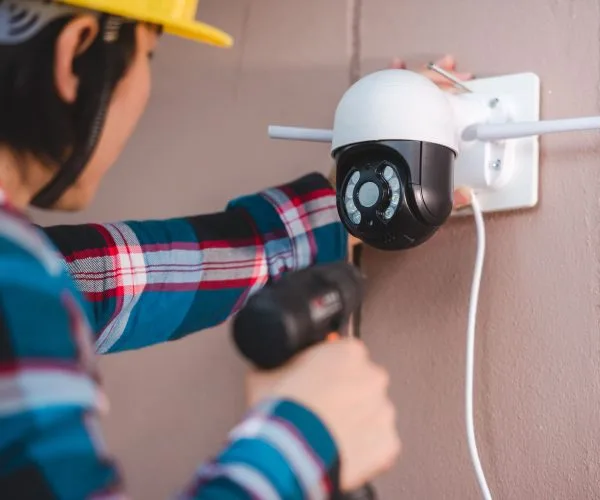
CCTV camera mounted as part of integrated ELV security system in Qatar with structured cabling.

Your security system is only as strong as the network it runs on. Without a stable, high-performance infrastructure, even the most advanced CCTV cameras or access control systems can falter when it matters most.

Think of structured cabling as the nervous system of your business. Every camera feed, access log, alarm trigger, and intercom message flows through it. If that system is outdated or poorly installed, problems are inevitable. You’ll face lagging video, dropped signals, and unreliable device performance.

In high-security zones like data centers, banks, or government offices, those gaps can be dangerous, even costly.

Here’s what a solid foundation includes:

  • Structured Cabling (Cat6, Cat6A): Clean, labeled, and future-ready installations
  • Fiber Optic Networks: OTDR and Fluke-tested lines for fast and secure data transmission
  • IP Phones & PA Systems: Secure communications across your facility
  • Network Switches & UPS: Backup systems that keep everything running, even during power cuts

Cybersecurity Solutions: Protecting Digital Assets

Person using laptop with digital shield and padlock overlay.

Qatar-Specific Requirements:

  • Data localization laws requiring sensitive data storage within Qatar
  • Regular security audits and certifications
  • Compliance with the National Cybersecurity Strategy 2024-2030
Cybersecurity solutions protect businesses from data breaches, ransomware attacks, and financial theft through firewalls, encryption, employee training, and incident response plans that safeguard digital assets and ensure regulatory compliance. Digital threats are invisible but devastating. One cyberattack can destroy years of business building.

Essential Cyber Protection:

  • Network firewalls to block malicious traffic
  • Antivirus software preventing malware and ransomware
  • Data encryption protecting sensitive information
  • Multi-factor authentication securing user accounts
  • Regular backups ensuring business continuity

Qatar-Specific Requirements:

  • Data localization laws requiring sensitive data storage within Qatar
  • Regular security audits and certifications
  • Compliance with the National Cybersecurity Strategy 2024-2030

Implementation Guide: How to Get Started

Successful security system implementation requires professional assessment, MOI-compliant design, phased installation, staff training, and ongoing maintenance to ensure effectiveness and regulatory compliance. Don't try to do this alone. Professional implementation ensures compliance and effectiveness.

Step 1: Security Assessment

  • Identify physical and digital vulnerabilities
  • Assess current security measures
  • Determine regulatory requirements
  • Calculate risk levels and priorities

Step 2: System Design

  • Work with MOI-approved providers
  • Plan integrated physical and cyber security
  • Design scalable solutions for future growth
  • Budget for installation and ongoing costs

Step 3: Professional Installation

  • Use certified technicians for all equipment
  • Ensure proper structured cabling solutions
  • Test all systems before going live
  • Document everything for compliance

Step 4: Staff Training

  • Train employees on new systems
  • Establish security procedures and protocols
  • Create incident response procedures
  • Regular refresher training sessions

Step 5: Ongoing Maintenance


  • Schedule regular system updates
  • Monitor system performance
  • Replace aging equipment proactively
  • Stay current with regulation changes

Choosing the Right Security Partner in Qatar

Your security provider determines your system’s effectiveness. Look for partners who offer MOI-approved systems, local regulatory knowledge, and integrated physical and cybersecurity solutions.

Essential Requirements:

  • MOI-SSD certified CCTV contractors
  • Complete access control and structured cabling services
  • Cybersecurity expertise aligned with Qatar’s national frameworks
  • Proven track record with local businesses

Implement Security as a Business Strategy with Premier Infotech

Premier Infotech is an ISO 9001:2015 certified, MOI SSD-approved CCTV contractor in Qatar. The company provides end-to-end security solutions, including surveillance systems, access control, structured cabling, and cybersecurity services.

Services include system design, installation, staff training, and ongoing maintenance with partnerships across leading technology brands, including Hikvision, ZKTeco, and BOSCH.

Need expert guidance on the right system for your business?